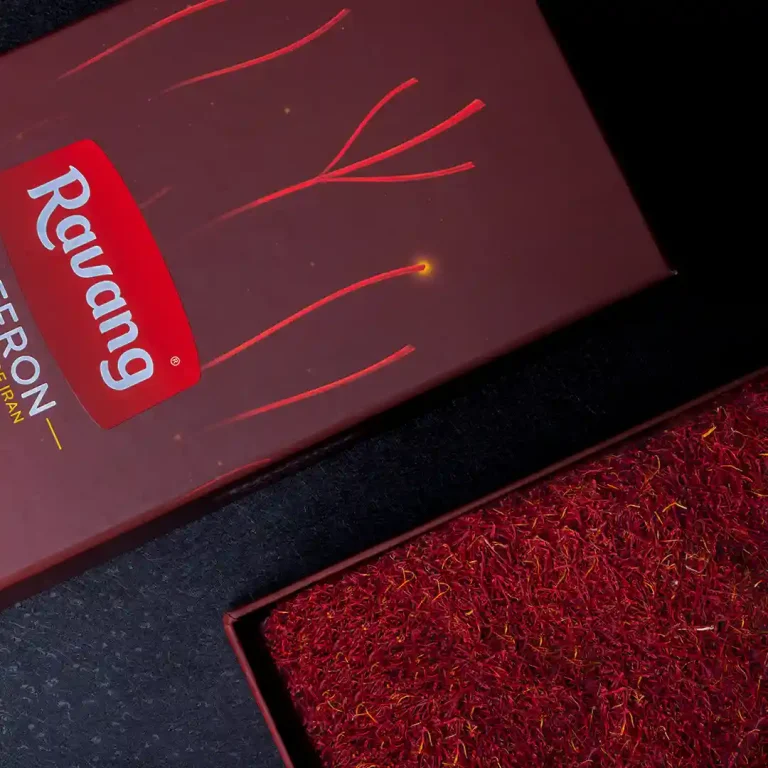
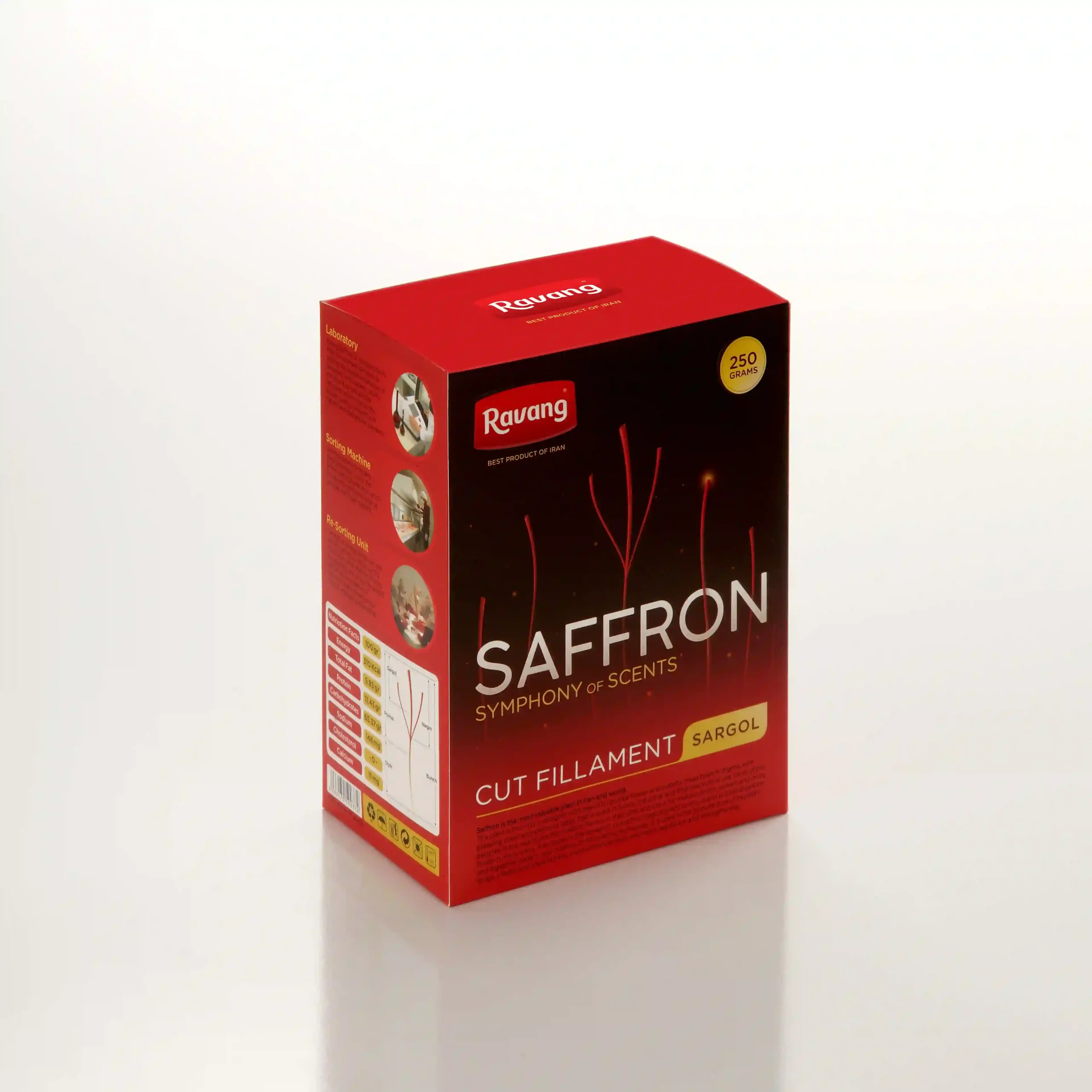
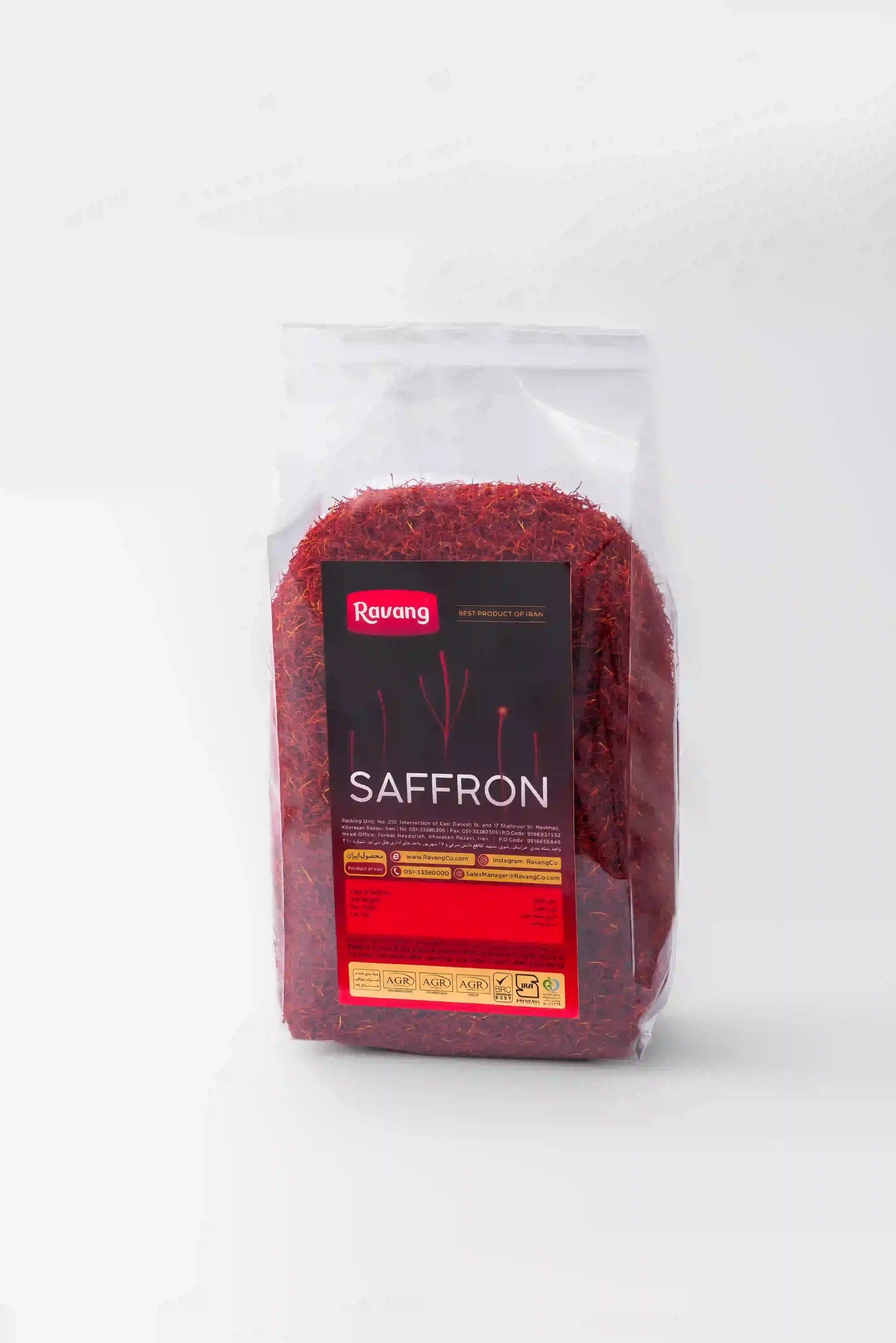
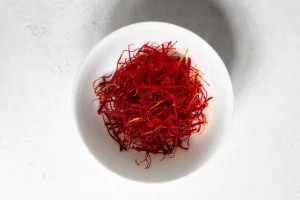
The filaments (stigma) of the Crocus Sativus plant are the source of saffron, which is the most costly spice in the entire world. Only 3 filaments are produced by each little blossom, which can help you understand how much is required to make 1 gram of pure saffron and why saffron is so expensive?! There are a lot of other countries that grow saffron, however, none come close to the quantity that Iran produces. In this particular article, we are going to show how to distinguish between the different saffron originating from the top three saffron-producing countries (Iran, India and Spain).
Iranian Saffron
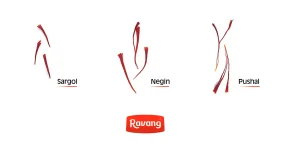
Iranian saffron, also known as Persian saffron, is considered to be one of the highest-quality saffron varieties in the world. It is mostly grown in the Khorasan province of Iran and is known for its deep red color, strong aroma, and bitter taste. Iranian saffron is often used in traditional Persian dishes such as saffron rice, stews, and desserts. There are generally three main types of Iranian saffron, each with its own unique characteristics:
1. Sargol: The most widely used and common type of saffron is for people’s use, and consumers are more familiar with this type of saffron. There are different grades of Sargol saffron, one of which is called AII-Red. In pure Sargol saffron, the cream or white part is wholly taken away, leaving only the red part. This is why it is called “all red.” Sargol saffron is graded and priced differently based on how thick the stigmas are, how fine or coarse they are, and whether or not they are broken. It is hard to say what kind of saffron Sargol is. Two things, called “stigma length” and “the presence or absence of white pieces of the root that have turned red and are mixed in with the load,” are used to grade saffron from 1 to 3.
2. Negin: This type of saffron has beautiful color and shape, and it smells great. This kind of saffron has three smooth, unbroken strands of stigmas that are connected (unlike Sargol saffron, where the stigmas have fractures). Because of this, this kind of saffron looks better and costs more than Sergol saffron. However, most people prefer to buy Sergol saffron, which has the same color and smell as Negin saffron but costs less. Customers from other countries are more likely to buy expensive saffron. There are two kinds of Negin saffron: Super-Negin and Semi-Negin.
3. Pushal: In Poshal saffron, the saffron cream (the white part) is kept away from under the flower so that the stigmas have 1-3 mm of cream. Some yellow or white can be seen at the end of the stigmas of the three branches of saffron, which gives it a pocket-like shape. This is why saffron is called Pushal. There are two kinds of pushal saffron: pushal and normal pushal. Pushal saffron with thick, smooth stigmas and little root cream is called Pendarian pushal. Pushal saffron with normal, wrinkled stigmas and more root cream is called normal pushal.
Indian Saffron
Indian saffron, also known as Kashmiri saffron, is grown in the Kashmir region of India. It has a slightly milder flavor than Iranian saffron, and the threads are thicker and shorter. Indian saffron is also known for its deep red color. India’s thick Kashmiri saffron strands are about 0.6 inches long and have a purple-maroon color. Some of the designs may be on them. They have a lot of smelly compounds, but they also have a lot of ash. India is known for having dishes with a lot of spices, so it does not come as a surprise that it is also one of the top producers of saffron, which is a very valuable spice. Even though it is called Jammu and Kashmir, it is not grown there. This kind of Indian saffron is also grown in the states of Karnataka and Himachal Pradesh, which are both great places to grow it.
Kashmiri saffron has different types as well. Mongra or Mogra is the best kind of saffron, all red saffron. Lachha is the second type of Indian saffron with red and yellow parts together. Zarda saffron has the lowest quality among all of the other kinds, made of yellow parts of saffron.
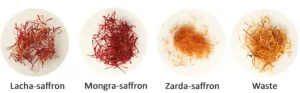 Different types of Indian saffron
Spanish Saffron
Spain may not hold the title of the largest saffron producer, nevertheless, it boasts the cultivation of some of the finest saffron available in the market. Spanish saffron is grown in the La Mancha region of Spain, and it is known for its floral aroma and sweet taste. Most people picture short, slightly curled, brighter-colored Spanish saffron. Spanish saffron is predominantly red-orange with a lot of yellows. Spanish saffron generally categorized into four clasees:
1. Coupé: Coupé is the highest quality that you can find in Spain. Coupé has all red saffron threads and it is as equal as the sargol threads in the Persian saffron.
2. La Mancha: La Mancha is the most expensive saffron. It is like Iranian Pushal saffron. The reason is because it is grown in a small region of Spain and the drying method is rather different. The saffron threads are toasted which results in a smokey flavor.
3. Rio: Rio is considered to be the regular grade 3 saffron which is considered low quality. However, it can be a great alternative to Coupé and La Mancha.
4. Sierra: Sierra is the lowest quality Spanish saffron that you can find. In the Sierra saffron type, you can find a lot of yellow threads and as we mentioned above, the yellow threads come from the direct toasting of the saffron.
Conclusion
In the end, it should be noted that the nomenclature of various saffron types may vary across different countries. However, if you want to acquire Persian saffron, you may choose a trustworthy saffron provider in Iran and get the grade you want from them. You can buy saffron directly from leading global saffron suppliers. In Ravang, we would be pleased to provide you with premium bulk/retail saffron at a decent price.